When you think about getting ready for a disaster, your mind probably jumps to essentials like water, canned food, and flashlights. But here’s something you might not have considered: your money. Having access to cash and financial services is just as crucial in an emergency. That’s why it’s super important to include financial preparedness in your disaster plan.
Here are some key financial tips to help you be ready for anything:
Check Your Insurance Coverage Regularly
Is your insurance enough? You need to know if you have enough coverage to fix or replace your home, car, and other valuable belongings if something happens. Also, consider temporary housing if you’re unable to stay in your home.
If you rent, consider renters’ insurance. It protects your belongings even if you don’t own the building.
Most importantly, make sure your insurance covers the types of disasters common in your area. For example, standard homeowner’s insurance usually doesn’t cover floods or earthquakes. You might need to buy extra coverage for those.
Build Your Emergency Savings Fund
While your insurance should cover most of the damage to your home and property, an emergency savings fund is key for immediate costs. It helps you pay for things right away and fills in any gaps your insurance might miss. Resources like the FDIC’s “How Money Smart Are You?” can help you start building this fund.
How Banks Operate During a Disaster
Natural disasters can affect how banks operate. They might close lobbies, offer drive-thru service only, or encourage you to use ATMs or online banking. It’s a good idea to explore your digital banking options now. For example, direct deposit for your paycheck means you won’t miss out on significant income if you can’t get to the bank.
Even if a bank has to limit operations, your money is safe. Deposits in an FDIC-insured bank are protected up to at least $250,000 per person, per bank, per ownership category, even if the bank were to fail.
Gather and Organize Important Documents
Imagine needing to prove who you are or access your financial info in an emergency. Having these documents ready is a lifesaver. Here’s what to collect and store in a safe place:
- Identification: Originals and copies of your driver’s license, passport, Social Security card, and birth certificate. Copies are helpful if the originals get lost.
- Contact Information: Phone numbers and websites for your banks, investment firms, and insurance companies.
- Financial Information: Copies of the front and back of your credit and debit cards, and the front of your checks. You might need these numbers to make payments.
- Current Insurance Policies: Information for your homeowner/renter, auto, and life insurance.
- Medical Information: Originals and copies of insurance cards and health records.
- Inventory of Valuables: A list of your valuable belongings. Keep receipts, written appraisals, and even photos to prove their value.
Smart Ways to Store Your Information
Once you’ve gathered everything, where should you keep it? Here are some suggestions:
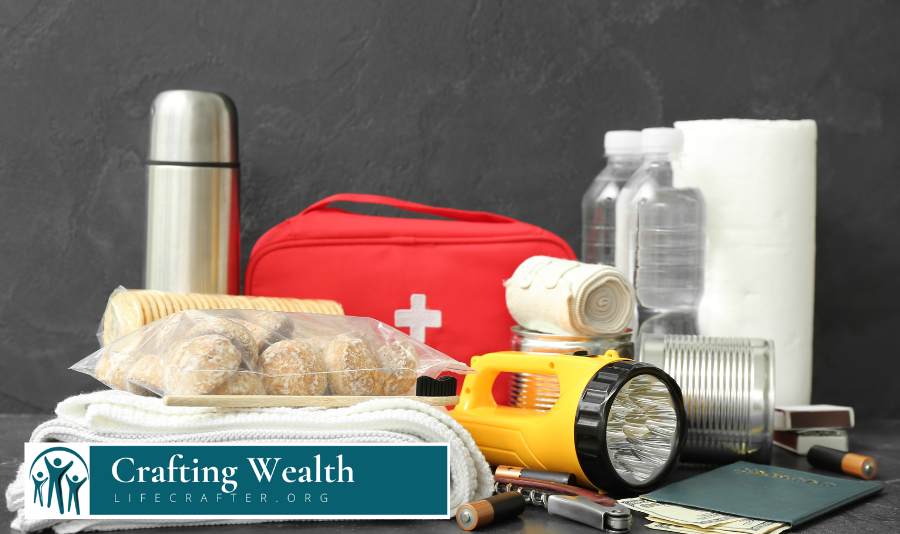
- Emergency Evacuation Bag: Along with personal safety items, include copies of some of your essential documents. While large amounts of cash are best kept in a bank, having a small amount of money on hand is smart in case ATMs and credit card machines aren’t working. Keep this bag in a secure, easy-to-grab spot for a quick exit.
- Digital Storage: Most documents can be stored electronically. Make sure you can access them on your smartphone or computer. For sensitive documents, use encryption and set up security features like passwords, fingerprint scans, or facial recognition on your devices.
- Bank Safe Deposit Box: This is a good spot for documents that are hard or impossible to replace and that you don’t need often. Since most safe deposit boxes aren’t waterproof, seal your documents in waterproof bags or containers to protect them from water damage.
What to Do If You Face Financial Trouble
If a natural disaster makes it hard for you to make loan payments on time, contact your lender immediately. Paying late or missing payments can lead to penalties, extra charges, and harm your credit score. Explain your situation as soon as possible; your lender should be able to work with you.
Beware of Scams After a Disaster
Dealing with a natural disaster is tough enough. Don’t let fraudsters make it worse. Scammers often try to take advantage of these situations to steal money and personal information. If you’ve been affected by a disaster, be careful about unsolicited offers for repairs or assistance. Especially avoid offers that pressure you to act quickly.
Some scammers might pretend to be charities. Only deal with charities you know or have thoroughly researched. Be cautious of anyone attempting to direct you to a fake website that could steal your money or financial details. Never give out your personal or financial information unless you are sure the person or organization you’re dealing with is legitimate.
Being prepared financially can make a huge difference when disaster strikes. Take the time now to get your plan in order! What’s one step you’re going to take this week to improve your financial preparedness?
####
Larry Marvin
LifeCrafter Money $ense
Sources
Department of Homeland Security (DHS), Disasterassistance.gov
FDIC Consumer News (FDIC), https://www.fdic.gov/consumer-resource-center/2025-08/preparing-your-finances-unanticipated-disaster?source=govdelivery&utm_medium=email&utm_source=govdelivery
Small Business Administration (SBA), Disaster Assistance
LifeCrafter.org. (2025). Gemini. https://gemini.google.com/app/f84041c46c538967

His passion is teaching and equipping people with the financial knowledge they need to act in the best interest of their money and family.
He is passionate about his faith, has been married to his wife for 54+ years, and has three adult children and fourteen grandchildren.
Larry Marvin is the co-founder and Executive Director of LifeCrafter Foundation.
- Wrap-Up: Your Money $ense Magic Checklist for Success - March 20, 2026
- Money $ense: The “Ghost Subscription” Audit - March 13, 2026
- Money $ense: The 48-Hour “Cooling Off” Rule - March 6, 2026